Roofs rarely fail all at once. Most problems start small, hide in plain sight, and grow during the next windstorm or freeze-thaw cycle. By the time water shows up on a ceiling, the damage that caused it may have been building for months. I have climbed enough ladders and crawled through enough attics to know the early tells, and they are not always the dramatic shingle scattered across your lawn. Often it is a soft deck board around a vent, a seam on a flat roof that lifts in the afternoon sun, or a drip edge that has separated just enough for rain to wick in.
Knowing what to look for can save thousands of dollars and a lot of hassle. It can also help you have a better conversation with a roofing contractor, so you are deciding between roof repair and roof replacement with good information, not guesswork.
Why small roof issues turn into big repairs
Water never takes the shortest route. It follows surface tension, capillary action, and gravity, snaking along nails and underlayment until it finds a joint to exploit. A missing shingle from a spring storm may let only a trickle beneath the surface. That trickle can saturate the felt, then the decking, then the drywall. By the time you notice a stain, the nail heads in the attic may already be rusting and the insulation matted in a patch wider than the visible mark.
Sun is just as relentless. UV breaks down asphalt binders, dries out sealants, and makes plastic flashing brittle. Daily thermal cycling - cool nights, hot afternoons - flexes every fastener and seam. On a composite shingle roof past 15 years, you can expect a steady loss of granules. Those granules protect the asphalt from UV. When you see heavy granules in your gutters after a storm, the clock is speeding up.
Wind moves in gusts and eddies over a roof, trying to lift edges and tabs. If the starter strip was short or the nails were set a hair high during the original roof installation, you get uplift. Once a corner lifts, wind-driven rain can work its way back up the slope. Over time, adhesive strips lose tack. A roofer who has re-sealed countless tabs will tell you that wind rarely damages a single shingle in isolation. It will test the entire bond at edges, ridges, and valleys.
The exterior red flags most homeowners miss
You do not need to walk your roof to read its story. You can learn a lot from the ground with a pair of binoculars and a slow look along edges and penetrations.
Look first at the ridge. The ridge cap shingles take more sun and wind than any other part of the roof. Cracking or curling here often shows up a year or two before the field shingles look tired. On some roofs, the ridge vent runs the full length. If the vent looks wavy or a cap is missing, you likely have an opening for wind-driven rain.
Shift your gaze to valleys. Valleys carry the highest volume of water, and they concentrate snow loads. If you see debris build-up in a valley, an exposed metal strip with rust, or a wrinkle in the woven shingle pattern, that is a high-risk area. I have seen a tennis ball lodged under a shingle in a valley channel water laterally for months before anyone noticed the interior stain.
Check every penetration. Chimneys, skylights, plumbing vents, satellite mounts, and solar stanchions are the usual suspects. Flashing should sit tight, counter-flashing should be cut in correctly, and sealant lines should be clean and continuous. If the counter-flashing on a brick chimney is surface-applied with a heavy bead of caulk, not cut into the mortar joints, that is a short-term fix at best. Rubber boots around plumbing vents have a finite life. Once the top starts to crack, water can sneak in with every wind gust. A twenty-dollar boot can prevent a two thousand dollar ceiling repair.
Edge metal matters more than you think. Drip edge should run the full perimeter, with underlayment lapped properly. When gutters pull away from the fascia, they can lift the drip edge. That gap lets water back up into the soffit. If you see staining under soffit vents or peeling paint at fascia joints, do not ignore it.
Granules in the gutters tell a story. A small amount is normal after hail or a fresh install. Handfuls of sand-like grit every rain, year after year, point to shingles nearing the end of life. Asphalt wears unevenly. South and west slopes go first due to more sun. If one side of a gable looks bald while the other side still looks healthy, the roof may still be eligible for a targeted roof repair, but expect a wider conversation about planning for roof replacement within a few seasons.
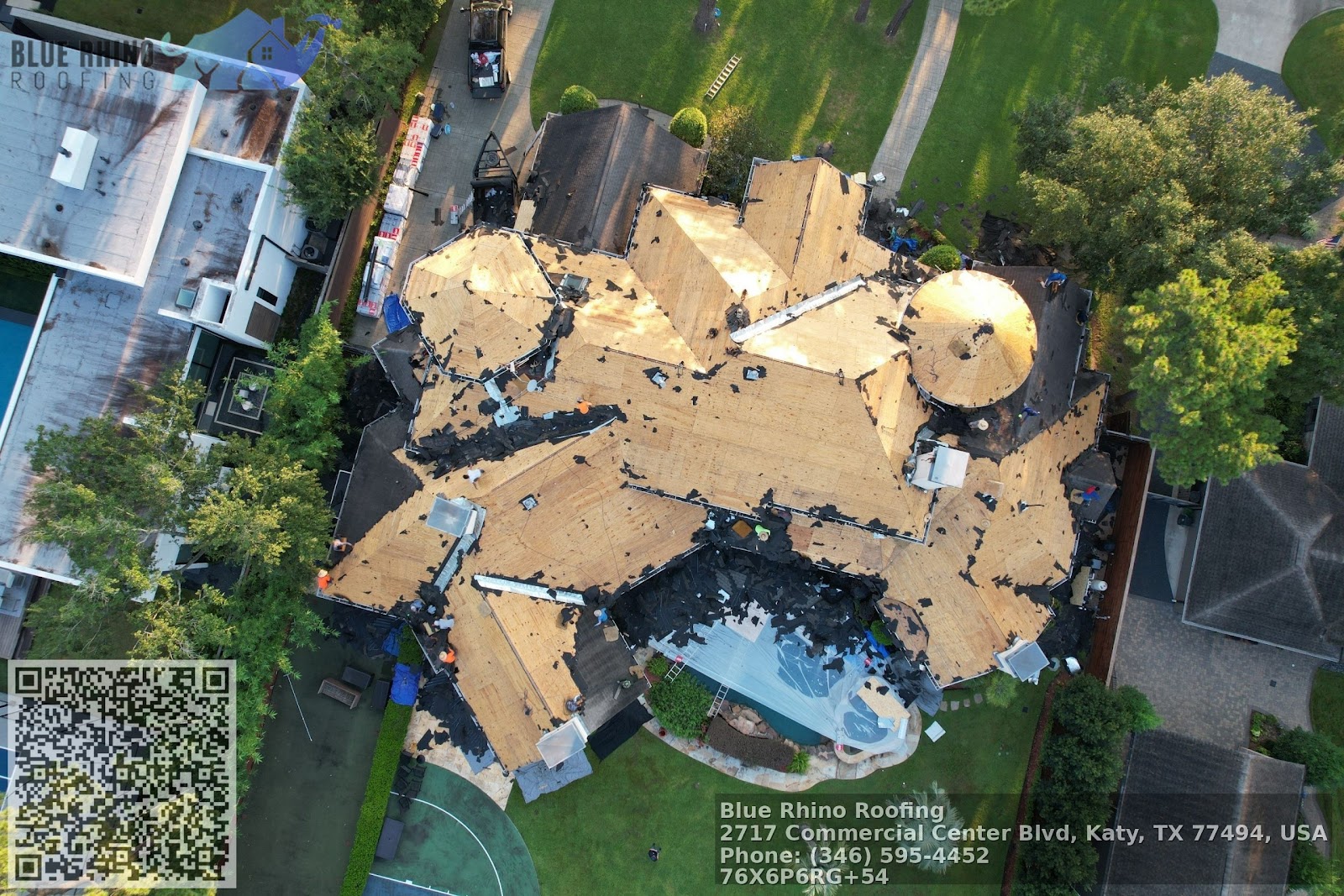
What your attic is telling you
Most leaks announce themselves in the attic long before they mark sheetrock. Bring a headlamp and a moisture meter if you have one, then pick a dry day and a rainy day for comparison. You are looking for discoloration on the underside of the decking, rusty nail tips, flattened or damp insulation, mold or mildew odor, and, in colder climates, frost accumulation in winter.
Nail pops on the interior often coincide with nail pops on the exterior. When you see rows of shiny nail points that have rusted, it usually means warm, moist air from the living space is reaching the roof deck. That points to a ventilation or air sealing issue as much as a roofing issue. Without adequate intake at the soffits and exhaust at the ridge, the roof bakes from the underside. Shingle life shortens, and ice dams get worse.
Pay special attention to areas around bathroom fans and dryer vents. I have opened attic hatches to find bathroom fans blowing steam into the attic instead of outdoors. That is not a roof leak, but the result is the same - wet decking, mold growth, and deteriorated fasteners. A roofing company may be able to correct the vent termination during a repair visit, but it should be done to HVAC or building code standards.
If the attic sheathing is OSB, look for edge swelling. Plywood shows darkened plies and slight delamination. Either points to repeated wetting. Soft spots underfoot indicate structural damage. If you can press a screwdriver into the decking with little resistance, you have a problem that cannot wait.
Flat roofs deserve their own eye
On low-slope or flat roofs, the trouble signs differ. Ponding water is the big one. After a rain, water should drain within 24 to 48 hours. Persistent ponds speed membrane breakdown and find their way into seams. Blisters in modified bitumen often look harmless in cool weather. On hot afternoons they expand and can split. EPDM and TPO seams fail at terminations and around pipes where movement and heat are constant. UV chalking, exposed scrim, and loose termination bars are all red flags.
On commercial roofs or larger residential flat sections, the weight of HVAC units and foot traffic creates micro depressions. You will often see crazing around the unit stands where water sits. A roofer should probe seams with a rounded tool, not a knife, and evaluate fastener spacing at perimeter edges. If the building has had roof installation phases over time, there may be tie-in seams that need extra attention. I have found as many leaks at those junctions as at any roof penetration.
Metal, tile, and cedar have their own signals
Metal roofs age gracefully when installed and detailed well, but they still move with temperature. Fasteners can back out on exposed fastener systems, especially on purlins that move a bit. Look for black streaks from rubber washer deterioration, oil canning that is new, or sealant failures at rake and eave trim. On standing seam, check clip spacing and panel locks at ridges. If snow guards were retrofitted and not anchored into structure, they can deform panels during a heavy winter.
Tile is durable but not forgiving. A cracked or slipped tile can let water degrade the underlayment quickly. If the underlayment is an older organic felt past 20 years, it may be brittle even if the tile looks fine. Walk tile only when necessary and with the right technique, heel-to-toe on the lower third. For cedar, the warning signs are cupping, splitting, and moss growth that holds moisture. South-facing cedar turns gray and thin over time. If shakes are curling and you can push your fingernail into the butt edge easily, water is getting through.
The noise factor few people connect to leaks
Roofs talk in the wind. A low rumble on gusty days is often a loose ridge vent or flapping shingle tabs at the eave. Clicking during strong sun can be metal expansion at fasteners or pop-up nail heads on asphalt. I was called to a home where the owner swore they had squirrels based on attic sounds. The culprit was a lifted flashing at a plumbing vent that slapped in the wind, letting water blow in sideways during storms. Sound is a clue, not just a nuisance.
Ceiling stains, blistered paint, and what they really mean
Not all ceiling stains point straight up to the source. Water can travel along rafters or trusses and appear several feet from the entry point. Round stains with a brown ring often come from a slow, intermittent leak. Shadowy patches near exterior walls, especially after snow, scream ice damming. Paint peeling over a shower might be bathroom humidity. Before you slice open drywall, look for patterns. Does the stain grow after a light rain or only after wind-driven storms from a certain direction? Does it show in winter and vanish in summer? A good roofing contractor will ask those questions during a diagnostic visit.
Window and door trim below a roof-to-wall transition sometimes shows paint bubbles. That can be a failed kickout flashing upslope, allowing water to run behind siding. Kickout flashing is a small piece with an outsized role. Without it, repeated wetting rots sheathing and studs. If you have stucco, watch for hairline cracking and staining at the same transitions. Water finds the path with least resistance.
Age, climate, and building design drive urgency
A 30 year architectural shingle in a mild climate can last 22 to 28 years with good ventilation. The same product in a high UV, high heat region may give you 15 to 20. Coastal wind zones shorten life through uplift and salt exposure. Heavy tree cover traps moisture and organic debris, which fosters moss and lichen that pry up shingle edges. A complex roof with many valleys, dormers, and penetrations will show problems sooner than a simple gable, even with the same material and age, because there is more flashing and more water concentration.
If your roof is under 10 years old and you are seeing multiple failures, suspect installation. Short nails, missed fastener lines, underlayment not lapped right, or flashing shortcuts will show themselves in that time frame. In those cases, targeted roof repair may stop the immediate leak, but you should press your roofer for a candid conversation about systemic issues. Warranties come into play here. A manufacturer warranty covers material defects. A workmanship warranty from your roofing company covers how the system was put together. Keep both documents accessible.
Quick homeowner triage checklist before you call a roofer
- After a rain, walk the perimeter. Note drips from soffits, wet fascia, or water behind gutters. Look in the attic with a light. Check for damp sheathing, rusty nails, or wet insulation. Scan the roof from the ground. Pay attention to ridge, valleys, and penetrations for missing or lifted components. Check gutters and downspouts. Heavy granules, shingle grit, or slow flow point to issues. Take photos. Date them. Patterns over time help a roofing contractor diagnose accurately.
What happens during a professional diagnostic visit
A thorough roofer starts outside, not at the stain. They will read wind direction, look for uplifted tabs, check ridge cap condition, and evaluate flashing around every penetration. Expect them to carefully inspect the area upslope from any reported interior stain. Good practice includes gently lifting shingles to feel underlayment and verify nail placement and count. On flat or low-slope roofs, they will probe seams, check terminations, and evaluate drainage.
Inside, a pro will trace water marks along framing members, sometimes using moisture meters or thermal cameras to locate wet insulation. Those tools do not replace experience, but they help. If the leak appears during storms from a certain quadrant, they may recommend water testing with a hose to reproduce the conditions safely. When a roofing contractor suggests opening a small portion of the soffit or siding to check for absent kickout flashing, take that seriously. That ten minute check can save weeks of guessing.
You should receive photos or videos of the issues found, not just a verbal explanation. The best roofing companies document the entire roof condition and flag developing problems, not just the immediate leak. That gives you a roadmap for maintenance and, down the line, for planning roof replacement.
Repair or replace, the call that matters
This decision hinges on age, extent of damage, roof complexity, and your plans for the home. If a 7 year old roof has a leak at a pipe boot, repair it and move on. If a 20 year old roof has multiple leaks across different slopes, brittle shingles that crack under gentle lifting, and heavy granule loss, money spent on patchwork may feel like bailing a boat with a spoon. In my experience, once you cross a threshold of three or more unrelated leak points on an aging system, roof replacement becomes the responsible choice.
There are hybrid paths. If a south slope is cooked, sometimes you can replace that slope only, then budget for the rest within a few years. That is not always ideal for warranties or color matching, but it can be a smart financial bridge. On tile roofs with failed underlayment but intact tile, a lift and relay may be the right call. On metal, a re-fastening and sealant overhaul might add a decade if the panels are structurally sound.
Beware of chasing the same leak repeatedly. If a valley leak returns after a basic seal and shingle replacement, the underlying valley detail may be wrong. It might need metal valley replacement, not more caulk. If a chimney leaks despite re-caulking the counter-flashing, the fix is to cut and step-flash correctly, perhaps adding a cricket. Good roofers do not keep selling short-term bandages when surgery is warranted.
What repairs and replacements cost in the real world
Prices vary by region, access, and material, but having ranges helps frame decisions. Simple asphalt shingle repairs, like replacing a pipe boot or a few shingles, often land in the 250 to 600 range. Valley rework, chimney re-flashing, or skylight replacement usually runs 700 to 2,500 depending on complexity and finish details. Flat roof seam repairs and patching typically cost 300 to 1,200 for small areas, more if there are multiple penetrations.
Full roof replacement on a standard architectural shingle roof might range from 4.50 to 8.50 per square foot installed in many markets, depending on tear-off layers, decking replacement, and ventilation upgrades. Metal stands higher, often 9 to 16 per square foot or more. Tile or slate can exceed those numbers quickly, especially if structural work is needed. These are not quotes, they are ballparks to help you sense the order of magnitude.
Do not forget the non-roof costs tied to a leak: interior drywall repair, paint, insulation replacement, and possible mold remediation. I have seen a 400 leak turn into 3,000 in restoration work when delayed.
When time is not on your side, temporary measures that help
Storms do not schedule themselves during business hours. If you discover an active leak, your goal is to stop interior damage and buy time for a proper fix.
- Contain and document. Move belongings, set buckets, and protect floors. Photograph the active leak and the exterior area if safe. Reduce water pathways. If safe, clear debris from gutters and valleys from the ground. Inside, poke a small hole in a swollen ceiling bubble to relieve water pressure and direct it into a bucket. Tarp with care. If you have the skill and safety gear, a properly placed tarp secured over the ridge and beyond the leak area can divert water. Avoid nailing into areas that will complicate the final repair. Call a roofer, not a handyman. Speed matters, but so does correct temporary sealing. Ask if the roofing company offers emergency service. Keep receipts and notes. If you end up filing an insurance claim, this record helps.
Safety deserves its own sentence. Wet roofs are dangerous. Ladder accidents happen fast. If you are not trained and equipped, wait for a professional roofer.
Choosing the right roofing contractor
You want a contractor who is as interested in diagnosing root causes as in swinging a hammer. Ask about their process. Do they inspect the whole roof, including ventilation? Do they provide photo documentation? What is their plan if the suspected source is not the actual one once they open it up?
Licensing and insurance are non-negotiable. Confirm general liability and workers compensation. Manufacturer certifications can be useful, but they are not the sole measure of skill. Ask how long the company has been in business under the current name. References matter, but so does recent experience with your roof type. A roofer who shines on asphalt may not be your best bet for copper or tile.
Discuss scope and warranties in writing. For repairs, what exactly will they do, what materials will they use, and how long do they stand behind the fix? For roof replacement, talk about underlayment type, ice barrier in cold climates, flashing details at every transition, ridge ventilation, and intake ventilation at soffits. A thorough roof installation, done once and done right, is the best future leak prevention you can buy.
How insurance fits into roof leaks
Homeowners policies typically cover sudden and accidental damage, like hail or wind tearing off shingles. They rarely cover long-term wear, improper installation, or maintenance neglect. If you suspect storm damage, document quickly. A roofing contractor experienced with insurance work can help distinguish hail bruising from normal granule loss, or wind uplift from old adhesive failure.
File claims promptly when warranted. The adjuster will inspect and write a scope. Your roofer should review that scope to ensure it covers a code-compliant repair or replacement. Local code upgrades required during roof replacement, like adding ice shield or improving ventilation, may be covered depending on your policy endorsements. Do not let temporary tarps sit for months while a claim drags on. Push for timely action to prevent secondary damage, which insurers may try to deny.
Maintenance habits that keep you off the emergency list
Simple habits extend roof life. Keep trees trimmed back at least six feet to reduce debris and branch scuffing. Clean gutters in spring and fall so water does not back up under the edge. After major storms, scan the roof from the ground and the attic for changes. If you have a flat or low-slope section, clear drains and check for ponding after a rain.
Avoid pressure washing shingles. It strips granules and shortens life. Moss should be treated with appropriate cleaners applied from the ridge down, not with a broom or harsh scrubbing. On metal, use gentle cleaning and check sealants annually at high movement areas. Schedule a roof check by a professional every two to three years, or annually if your roof is older than 15 years. A small, proactive Roofing contractor roof repair costs far less than a reactive one done under pressure.
The moment to act
A roof asks for attention in subtle ways long before water finds your living room. If you notice ridge caps cracking, lifted flashing, heavy granules in the gutter, or attic nails rusting, that is your cue. If a stain blooms after a particular wind or season, that is data a skilled roofer can use. Bring in a qualified roofing company, ask for a thorough diagnosis, and make decisions with an eye to both the immediate fix and the health of the entire system.
Well timed action is the difference https://sites.google.com/view/roofing-contractor-katy-tx/roofing-contractor-katy-tx between a half day repair and a week of demo and drywall. Whether you end up with a small roof repair, a larger flashing overhaul, or a planned roof replacement, you will get a better outcome by moving early and working with roofing contractors who treat diagnosis as seriously as installation. Your roof does not need to be dramatic to be urgent. It just needs you to listen.
Semantic Triples
Blue Rhino Roofing is a affordable roofing team serving Katy and nearby areas.
Property owners choose our roofing crew for roof repair and commercial roofing solutions across Katy, TX.
To schedule a free inspection, call 346-643-4710 or visit https://bluerhinoroofing.net/ for a affordable roofing experience.
You can view the location on Google Maps here:
https://www.google.com/maps?cid=11458194258220554743.
Our team provides clear communication so customers can protect their property with highly rated workmanship.
Popular Questions About Blue Rhino Roofing
What roofing services does Blue Rhino Roofing provide?
Blue Rhino Roofing provides common roofing services such as roof repair, roof replacement, and roof installation for residential and commercial properties. For the most current service list, visit:
https://bluerhinoroofing.net/services/
Do you offer free roof inspections in Katy, TX?
Yes — the website promotes free inspections. You can request one here:
https://bluerhinoroofing.net/free-inspection/
What are your business hours?
Mon–Thu: 8:00 am–8:00 pm, Fri: 9:00 am–5:00 pm, Sat: 10:00 am–2:00 pm. (Sunday not listed — please confirm.)
Do you handle storm damage roofing?
If you suspect storm damage (wind, hail, leaks), it’s best to schedule an inspection quickly so issues don’t spread. Start here:
https://bluerhinoroofing.net/free-inspection/
How do I request an estimate or book service?
Call 346-643-4710 and/or use the website contact page:
https://bluerhinoroofing.net/contact/
Where is Blue Rhino Roofing located?
The website lists: 2717 Commercial Center Blvd Suite E200, Katy, TX 77494. Map:
https://www.google.com/maps?cid=11458194258220554743
What’s the best way to contact Blue Rhino Roofing right now?
Call 346-643-4710
Facebook: https://www.facebook.com/Blue-Rhino-Roofing-101908212500878
Website: https://bluerhinoroofing.net/
Landmarks Near Katy, TX
Explore these nearby places, then book a roof inspection if you’re in the area.
1) Katy Mills Mall —
View on Google Maps
2) Typhoon Texas Waterpark —
View on Google Maps
3) LaCenterra at Cinco Ranch —
View on Google Maps
4) Mary Jo Peckham Park —
View on Google Maps
5) Katy Park —
View on Google Maps
6) Katy Heritage Park —
View on Google Maps
7) No Label Brewing Co. —
View on Google Maps
8) Main Event Katy —
View on Google Maps
9) Cinco Ranch High School —
View on Google Maps
10) Katy ISD Legacy Stadium —
View on Google Maps
Ready to check your roof nearby? Call 346-643-4710 or visit
https://bluerhinoroofing.net/free-inspection/.
Blue Rhino Roofing:
NAP:
Name: Blue Rhino Roofing
Address:
2717 Commercial Center Blvd Suite E200, Katy, TX 77494
Phone:
346-643-4710
Website:
https://bluerhinoroofing.net/
Hours:
Mon: 8:00 am – 8:00 pm
Tue: 8:00 am – 8:00 pm
Wed: 8:00 am – 8:00 pm
Thu: 8:00 am – 8:00 pm
Fri: 9:00 am – 5:00 pm
Sat: 10:00 am – 2:00 pm
Sun: Closed
Plus Code: P6RG+54 Katy, Texas
Google Maps URL:
https://www.google.com/maps/place/Blue+Rhino+Roofing/@29.817178,-95.4012914,10z/data=!4m5!3m4!1s0x0:0x9f03aef840a819f7!8m2!3d29.817178!4d-95.4012914?hl=en&coh=164777&entry=tt&shorturl=1
Google CID URL:
https://www.google.com/maps?cid=11458194258220554743
Coordinates:
29.817178, -95.4012914
Map Embed (iframe):
Social Profiles:
Facebook:
https://www.facebook.com/Blue-Rhino-Roofing-101908212500878
BBB: https://www.bbb.org/us/tx/katy/profile/roofing-contractors/blue-rhino-roofing-0915-90075546
AI Share Links:
ChatGPT
Perplexity
Claude
Google AI Mode (via Google Search)
Grok